 Image 1 of 5
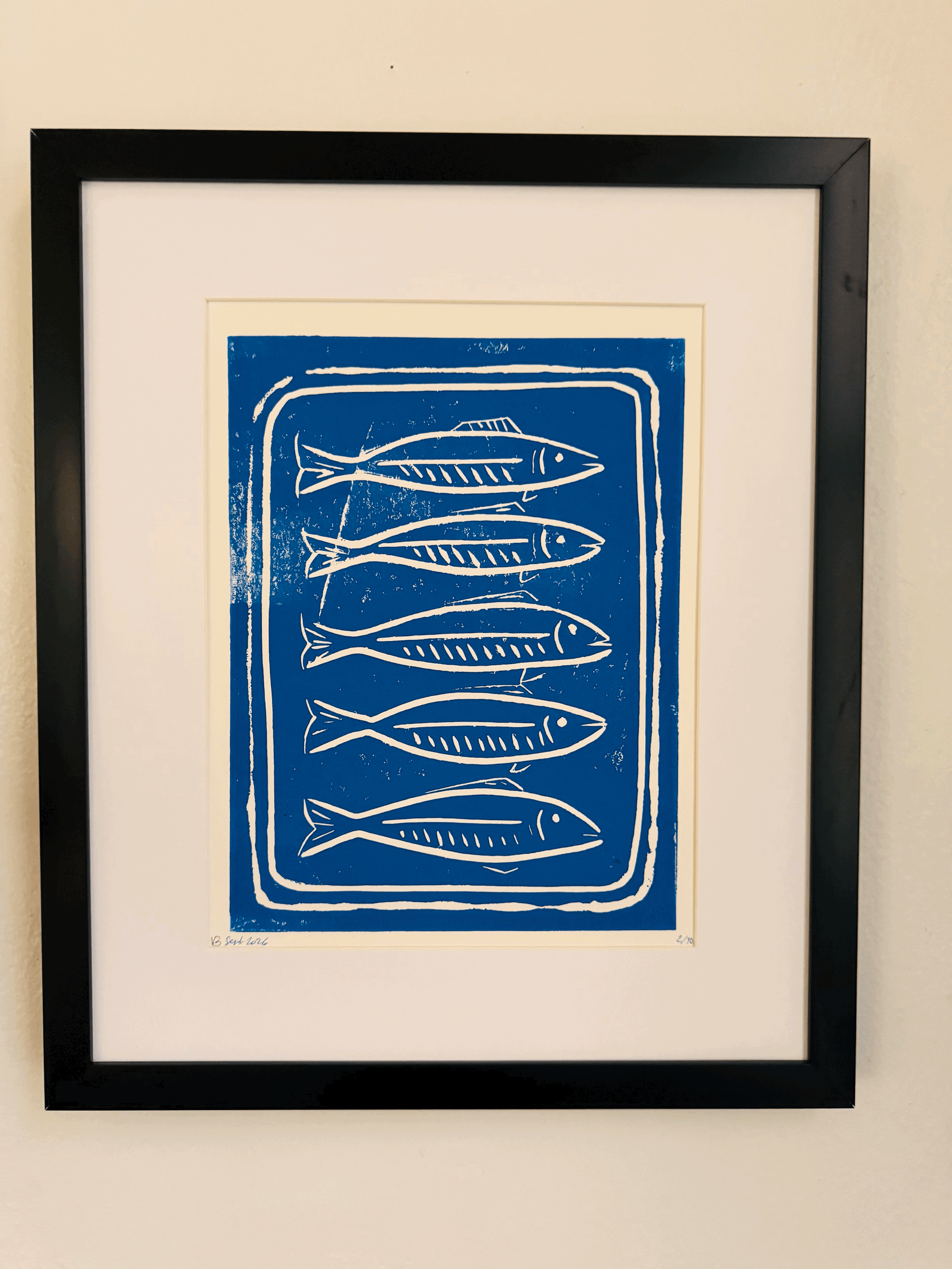 Image 2 of 5
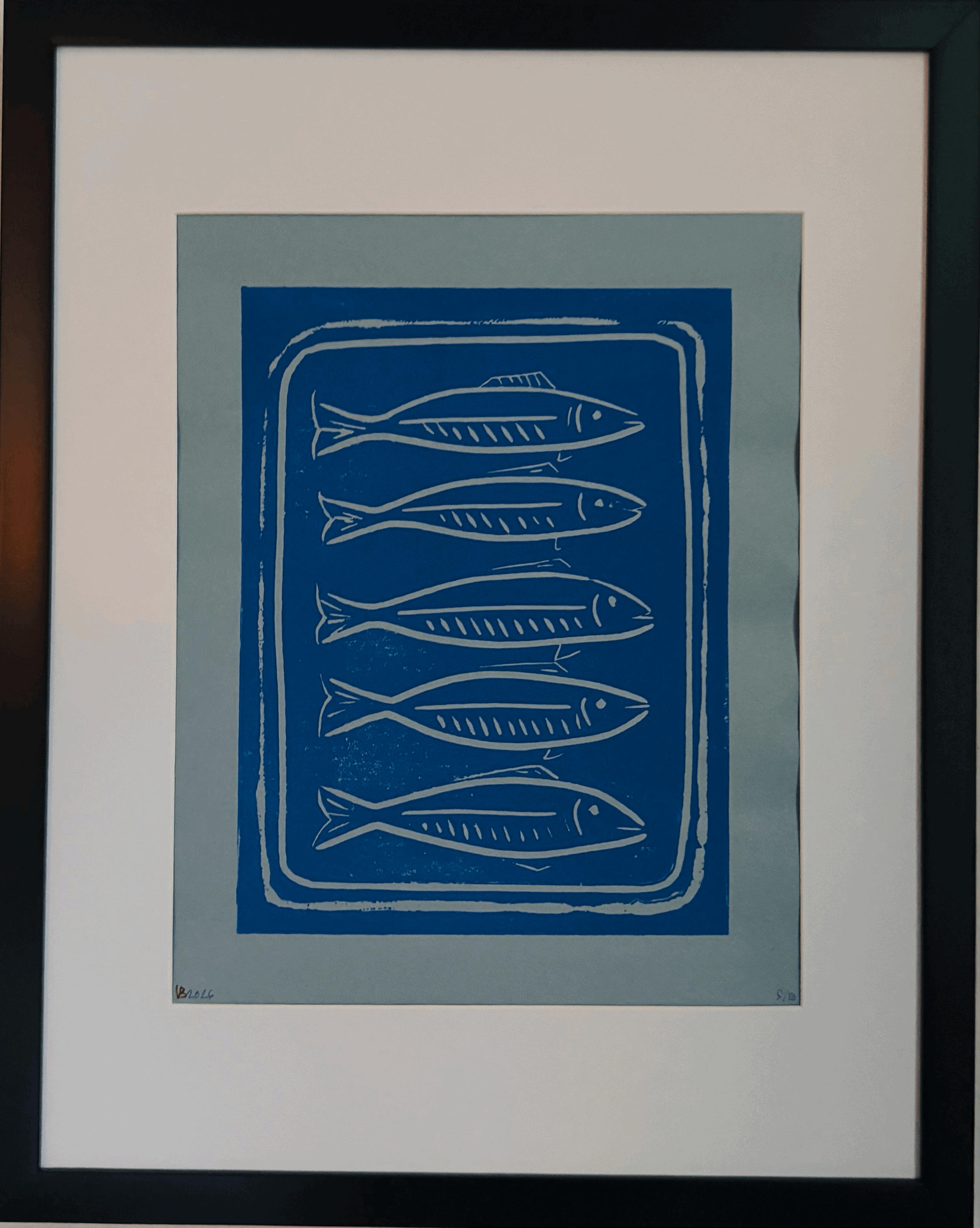 Image 3 of 5
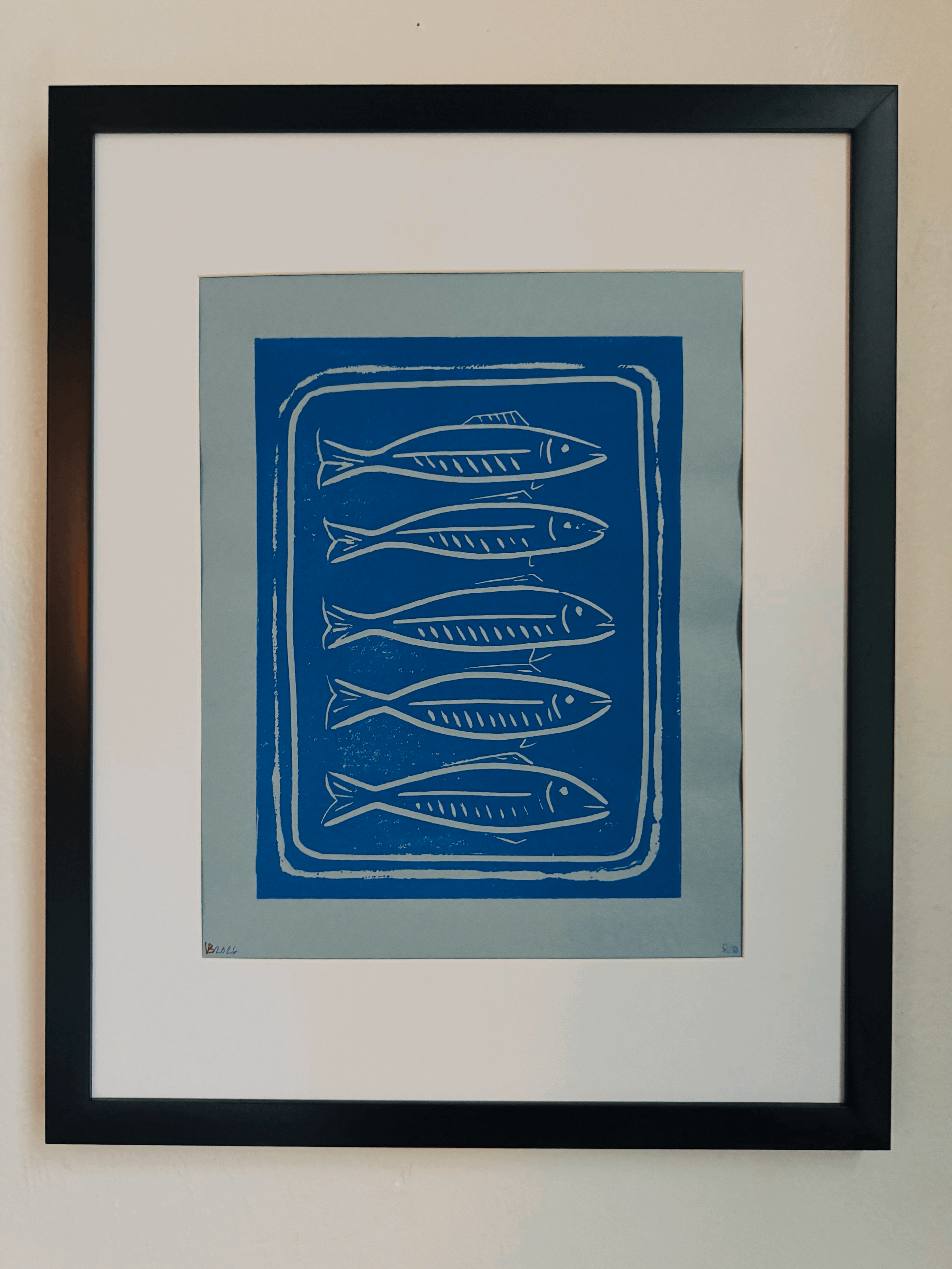 Image 4 of 5
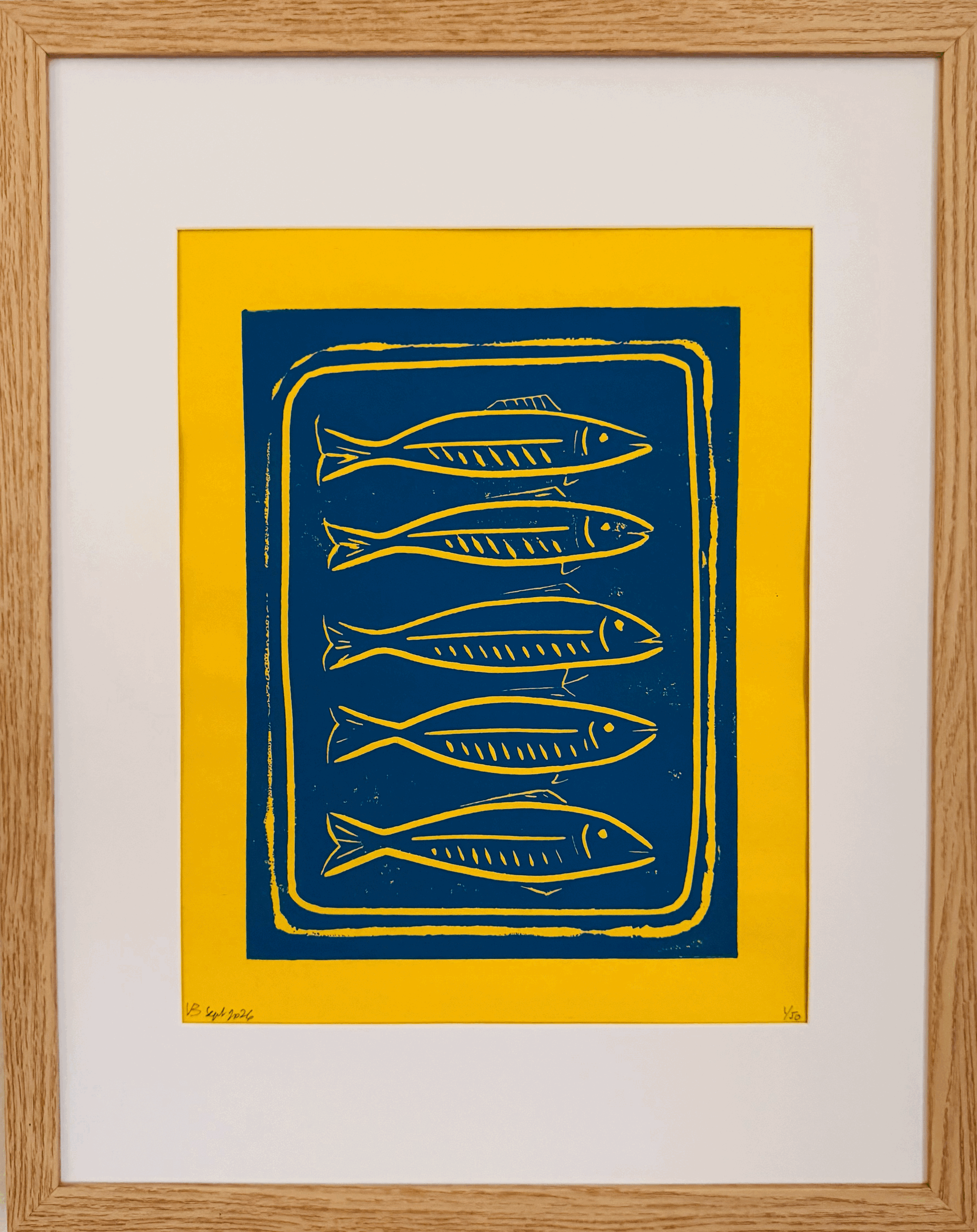 Image 5 of 5
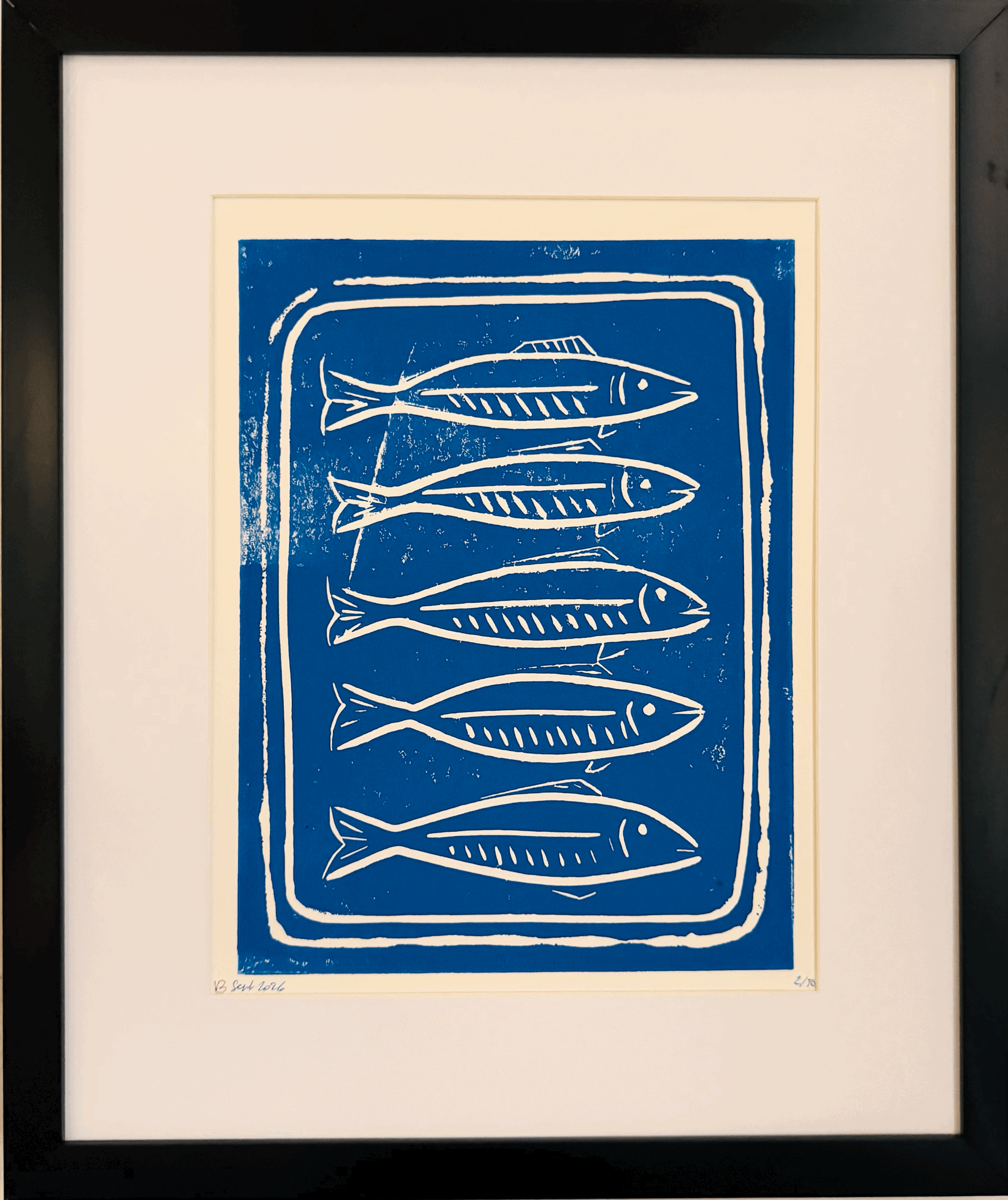
The Sardines, large version
A single-sheet lithograph, generously scaled. Four sardines—elongated, textured, unadorned—aligned horizontally across a wide, cream field. Inked in deep ultramarine with subtle variances: dense passages where the press held, near-transparencies where ink thinned. Each fish shows the same restrained anatomy—arched backs, tapered tails, fine cross-hatching for scales—yet small deviations in mark-making give the group a quiet individuality. Negative space is equal partner: the expanse above and below the row compresses the eye toward the center, turning repetition into rhythm.
Visual notes
Composition relies on horizontal continuity. The sardines function as both subject and repeated motif—familiar, modest, and oddly monumental when scaled up.
Surface shows plate textures and registration variances, evidence of manual printing rather than digital reproduction.
The large format accentuates subtle imperfections: tiny flecks of paper, uneven ink lay, and the occasional hairline overlap at tail tips—these are integral, not flaws.
Why collect this piece
The Sardines, large version reframes an everyday subject with minimal means—strong composition, tactile printmaking, and scale that transforms modest imagery into a meditative object. For collectors interested in unrefined, simple print art, it’s a direct, unembellished example of process-centered work.